WORK MANAGEMENT & EXECUTION
How maintenance work moves from idea to completion.
What maintenance planning is, why it matters, and how planners create value.

How maintenance work moves from idea to completion
Work Management & Execution focuses on how maintenance demand is translated into executable work. It covers the flow of work from identification through planning, scheduling, and delivery, and the conditions required for execution to be predictable rather than reactive.
This pillar sits where most planning friction is felt day to day. When work management is weak, planners spend their time chasing, rework increases, and schedules lose credibility. When it is strong, planning effort converts reliably into completed work.
PILLAR 2 // Work Management & Execution – Core Topics
The Work Order Lifecycle
How maintenance work should move from request to completion in a controlled, auditable way. This topic clarifies each stage of the lifecycle and the planning decisions that matter most at each point.
Backlog Health & Prioritisation
A healthy backlog enables good planning. This section explores how backlog structure, age, and prioritisation affect execution quality, and why an unmanaged backlog undermines every other planning effort.
Planning-Scheduling Interfaces
Planning and scheduling are distinct but interdependent. This topic focuses on how information, ownership, and timing should flow between the two to avoid last-minute changes and execution failure.
Execution Readiness
Work that is not ready should not be scheduled. This section defines what “ready” really means, and how readiness standards protect both planners and execution teams from avoidable disruption.
The Weekly Maintenance Cycle
Effective execution depends on rhythm. This topic introduces weekly cycle thinking, explaining how consistent planning and scheduling cadences stabilise work delivery and reduce firefighting.
Managing Exceptions & Reactive Work
No system is disruption-free. This section addresses how reactive and emergent work should be absorbed without collapsing the entire plan, and how planners protect the system while remaining flexible.
PILLAR 2 // Frameworks & Resources
The Work Management and Execution pillar is supported by dedicated frameworks and long-form resources that explore these ideas in depth and translate them into practical thinking tools for planners and leaders.
These assets sit at the heart of this pillar.

Mastering The Weekly Maintenance Planning Cycle
A practical handbook focused on the single most important rhythm in maintenance planning. This guide breaks down how effective organisations plan, schedule, and execute work on a weekly cadence, turning planning effort into predictable delivery rather than constant firefighting.
It is designed to help planners stabilise execution, improve schedule credibility, and create clear interfaces between planning, scheduling, and the shop floor.
This handbook covers:
- How a well-run weekly cycle actually works, end to end
- Clear roles and handoffs between planners, schedulers, and operations
- Readiness standards that protect the schedule from late changes
- Common failure points that cause weekly plans to collapse

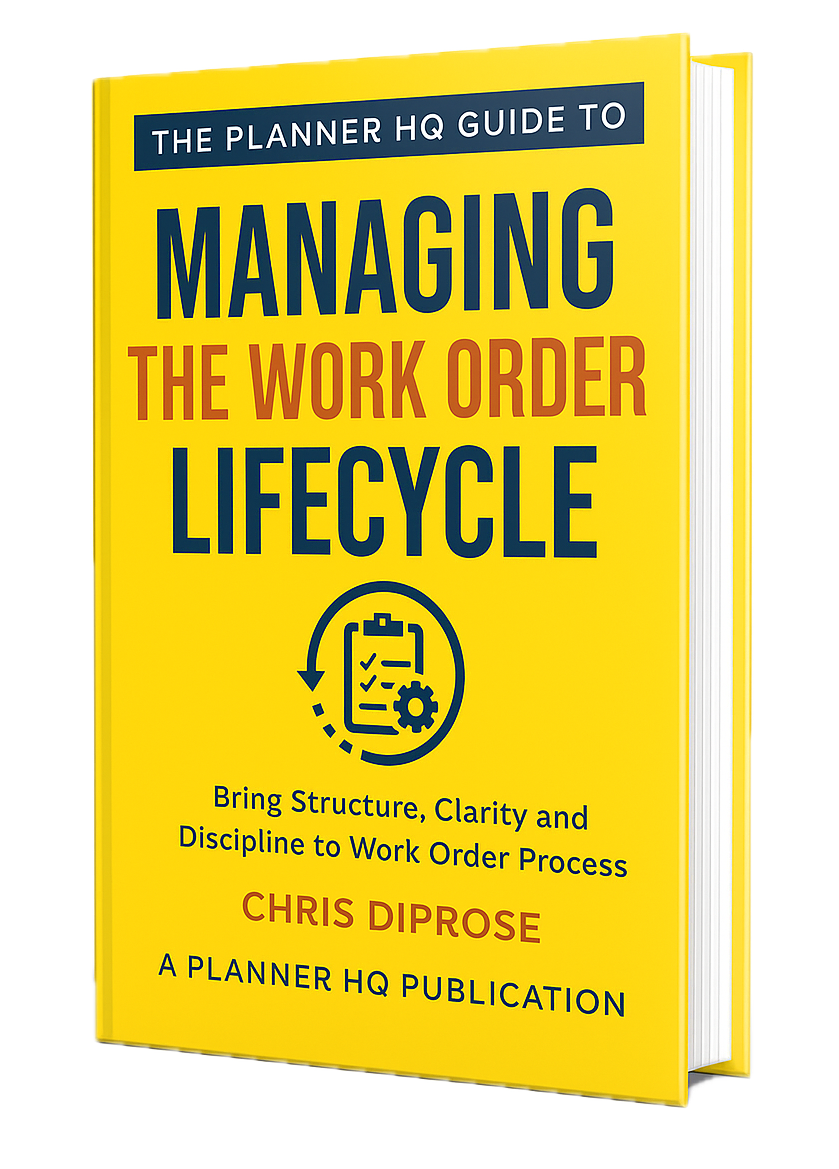
Managing The Work Order Lifecycle
A practical handbook focused on the single most important rhythm in maintenance planning. This guide breaks down how effective organisations plan, schedule, and execute work on a weekly cadence, turning planning effort into predictable delivery rather than constant firefighting.
It is designed to help planners stabilise execution, improve schedule credibility, and create clear interfaces between planning, scheduling, and the shop floor.
This handbook covers:
- Common failure points that cause weekly plans to collapse
- How a well-run weekly cycle actually works, end to end
- Clear roles and handoffs between planners, schedulers, and operations
- Readiness standards that protect the schedule from late changes
WORK MANAGEMENT & EXECUTION // Key Related Articles

5 Worst Ways to Run a Weekly Maintenance Schedule
Many organizations treat scheduling as a box-ticking exercise. As long as a document or CMMS screen says, “Here’s the schedule,” they assume it’s good enough. But the reality is that a weak schedule almost always leads to poor compliance, reactive work interruptions, and chaos.
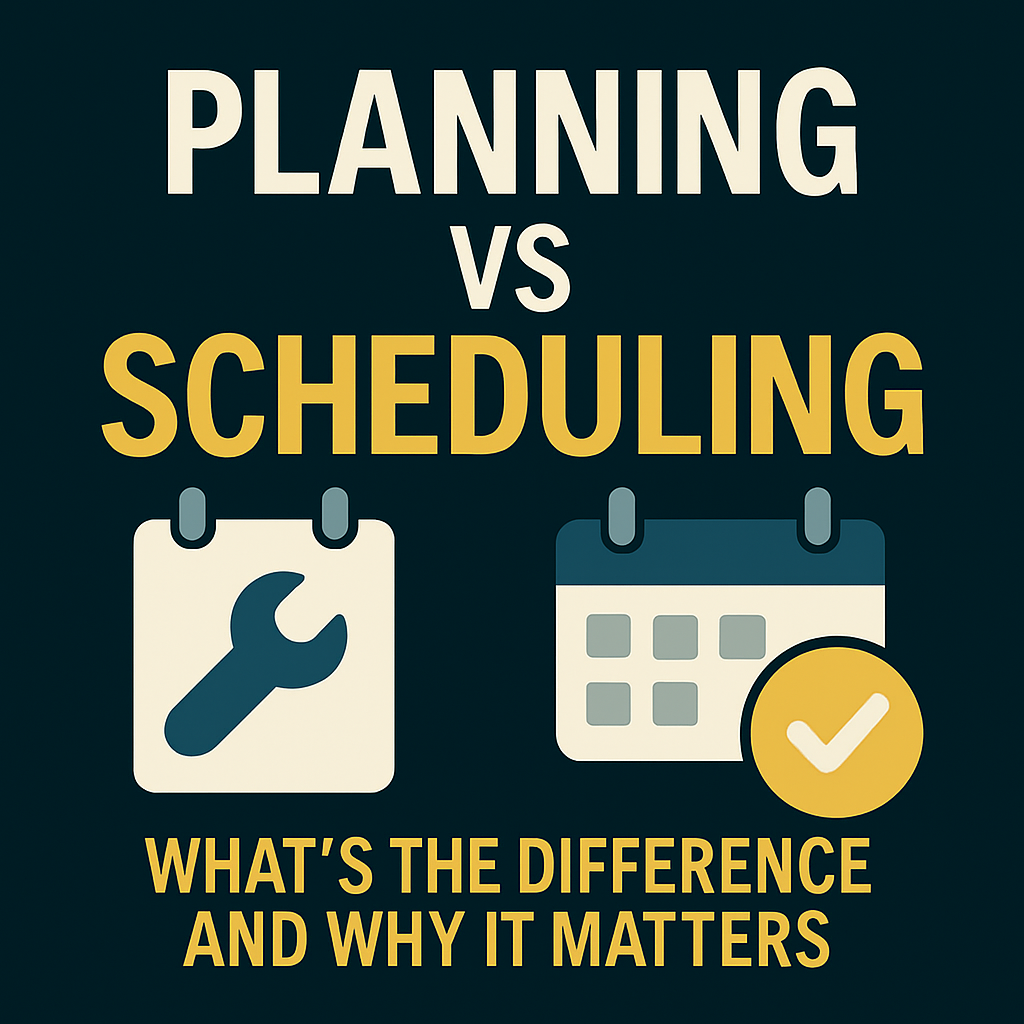
Planning vs Scheduling – What’s The Difference?
he two terms are often used interchangeably, yet they represent very different functions. Understanding where each fits — and why both are essential — can be the difference between a maintenance process that flows and one that constantly struggles

8 Ways To Boost Maintenance Scheduling Compliance
Poor compliance undermines the entire planning process. It frustrates technicians, confuses operations, and gives leadership the impression that planning “doesn’t work.” Here are eight practical ways to raise your schedule compliance and keep it high.
How Work Management and Execution Determine Planning Credibility
Work management and execution are where planning intent is either realised or quietly undermined. No matter how strong the foundations, how well defined the role, or how capable the planner, planning only delivers value when work moves through the system in a controlled and disciplined way. This pillar exists because execution is where planning credibility is earned or lost.
In many organisations, the volume of maintenance work is not the core problem. The problem is how that work enters the system, how it is prioritised, and how consistently it is prepared for execution. When demand is poorly controlled, backlogs become distorted, priorities shift without explanation, and planners are forced into reactive coordination rather than deliberate preparation. Over time, this erodes trust in the plan itself.
Effective work management creates stability by introducing structure before work reaches the schedule. It defines how work requests are raised, assessed, planned, and released, and ensures that decisions are made at the right point in the lifecycle rather than deferred to the last possible moment. This upstream discipline is what allows execution teams to operate with confidence rather than assumption.
Execution readiness is a central theme within this pillar. Work that is released without the right information, materials, access, or approvals does not become executable simply because it appears on a schedule. Instead, it transfers uncertainty downstream, where it is absorbed through delays, workarounds, and rework. Readiness standards protect the plan by preventing this transfer of risk and by making the cost of poor preparation visible.
The interface between planning, scheduling, and execution is another common failure point. When ownership is unclear or handoffs are poorly defined, planners are drawn into last-minute changes and expediting, while execution teams lose confidence in planned work. Clear interfaces and disciplined cadences allow each role to focus on its intended contribution, reducing friction and improving overall flow.
Work management also depends on rhythm. Weekly planning and scheduling cycles provide a predictable cadence that stabilises decision-making and reduces the cognitive load on planners and supervisors alike. Without rhythm, every week becomes an exception, priorities are constantly renegotiated, and planning effort is diluted across too many competing demands.
Reactive and emergent work will always exist, but it should not define the system. Strong work management absorbs disruption without collapsing, allowing planners to remain in control even under pressure. When this balance is achieved, execution becomes more predictable, schedules become credible, and planning effort translates into completed work rather than constant adjustment.
Ultimately, this pillar represents the point where planning stops being theoretical. Work Management and Execution determine whether planning is respected as a professional discipline or dismissed as administrative overhead. When the system is sound, planners spend their time improving readiness and flow. When it is not, even the best planning intent struggles to survive contact with reality.
Stay Connected to the Planner HQ Learning Journey
Occasional updates when new frameworks, resources, and planning insights are released.
Why Work Management & Execution Matter
Work management and execution determine whether planning effort results in completed work or constant rework. When these disciplines are weak, planners are pulled into expediting, priorities shift without warning, and schedules lose credibility. Over time, planning becomes reactive by necessity rather than by choice.
Strong work management creates control before work reaches execution. It stabilises demand, protects the schedule, and ensures that decisions are made early enough to influence outcomes. This allows planners to focus on improving readiness and flow rather than absorbing avoidable disruption.
Ultimately, this pillar is where planning is judged. Effective execution builds trust in the plan, improves reliability, and reinforces planning as a professional discipline. Poor execution undermines even the best planning intent.
Who This Pillar Is For?
This pillar is particularly relevant for:
1
Maintenance planners responsible for turning demand into executable work
2
Planners and schedulers dealing with unstable backlogs and changing priorities
3
Supervisors and maintenance leaders trying to improve schedule credibility
4
Organisations struggling to move from reactive work to controlled execution
How This Pillar Connects to the Wider System
Work Management and Execution sit at the point where planning intent is tested in practice. The clarity established in Planning Foundations determines how work is prioritised, prepared, and released. Without clear purpose, ownership, and standards, work management becomes reactive and inconsistent.
This pillar depends heavily on effective CMMS configuration and data governance. Work order structure, status control, and readiness information must be supported by systems that reinforce disciplined behaviour rather than bypass it. When governance is weak, execution absorbs the resulting uncertainty.
Asset and spare parts strategies directly influence execution readiness. Inaccurate asset data, poor bills of material, or unreliable stock availability undermine even well-planned work. Strong execution relies on these enablers being in place before work is scheduled.
Performance measurement and improvement depend on predictable execution. Schedule compliance, backlog health, and reliability outcomes only become meaningful when work flows through the system in a controlled way. This pillar provides the operational stability required for effective performance management and long-term improvement.
PILLAR NAVIGATION
Use the below buttons to navigate between the 5 Pillars

PLANNING FOUNDATIONS

WORK MANAGEMENT & EXECUTION

CMMS & DATA GOVERNANCE

ASSET & SPARE PARTS STRATEGY