PLANNING FOUNDATIONS
What maintenance planning is, why it matters, and how planners create value.

The thinking, intent, and behaviours that make maintenance planning valuable.
Planning Foundations defines what maintenance planning is meant to do, not just what planners are busy doing. It establishes the purpose of planning, the role of the planner, and the conditions under which planning genuinely creates value rather than noise.
Without strong foundations, planning becomes transactional, misunderstood, and easy to bypass. With them, it becomes a credibility-building function that improves execution, reliability, and decision-making across the organisation.
PILLAR 1 // Planning Foundations – Core Topics
The Purpose of Maintenance Planning
Planning exists to reduce uncertainty before work reaches execution. This section clarifies the purpose of planning beyond scheduling tasks, and explains how planning supports safety, reliability, cost control, and trust.
Mindset and Behaviours
Effective planning is as much behavioural as it is technical. This topic explores how planners think, how they influence without authority, and how daily habits either reinforce or undermine planning credibility.
Role Clarity and Ownership
Many planning functions fail because the role itself is unclear. This section defines what planners should own, what they should not, and how blurred accountability damages both execution and morale.
Where Value is Created and Lost
Not all planning activity is valuable. This topic focuses on distinguishing high-impact planning work from low-value administrative work, and on recognising common traps that make planners busy but ineffective.
Maturity and Organisational Readiness
Planning capability evolves over time. This section introduces the concept of planning maturity, how organisations progress through it, and why applying “advanced” practices too early often backfires.
Language and Standards
Good planning needs consistent language and standards. Unclear definitions, terminology, and weak standards lead to poor decisions, rework, and misalignment between planning, operations, and leadership.
PILLAR 1 // Frameworks & Resources
The Planning Foundations pillar is supported by dedicated frameworks and long-form resources that explore these ideas in depth and translate them into practical thinking tools for planners and leaders.
These assets sit at the heart of this pillar.
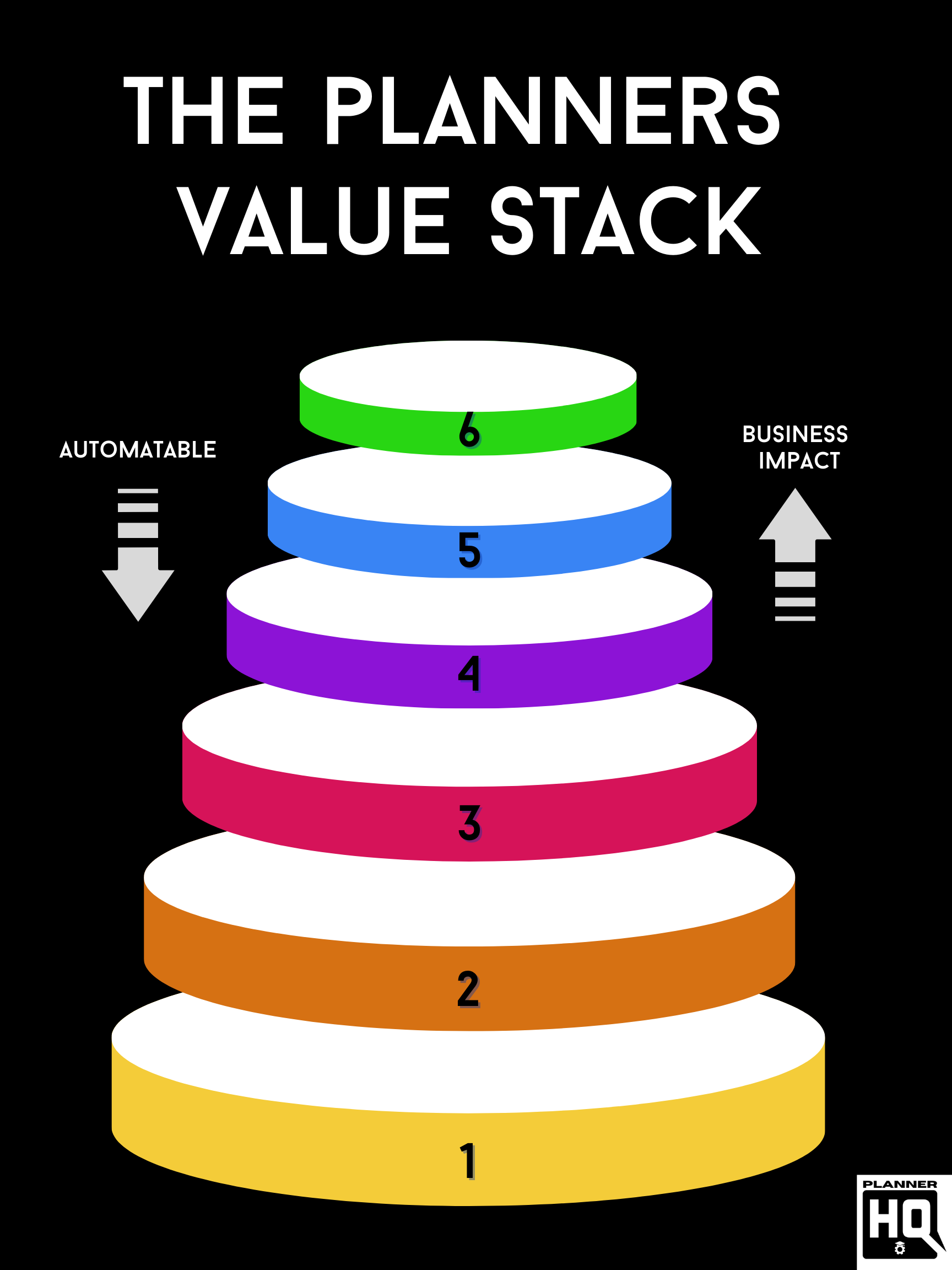
The Planners Value Stack
A foundational framework that explains how maintenance planners create value at different levels of an organisation, from day-to-day execution support through to strategic decision enablement.
It is designed to help planners understand:
- Where their effort has the greatest impact
- How planning value compounds when done consistently
- Why some planning activities matter far more than others

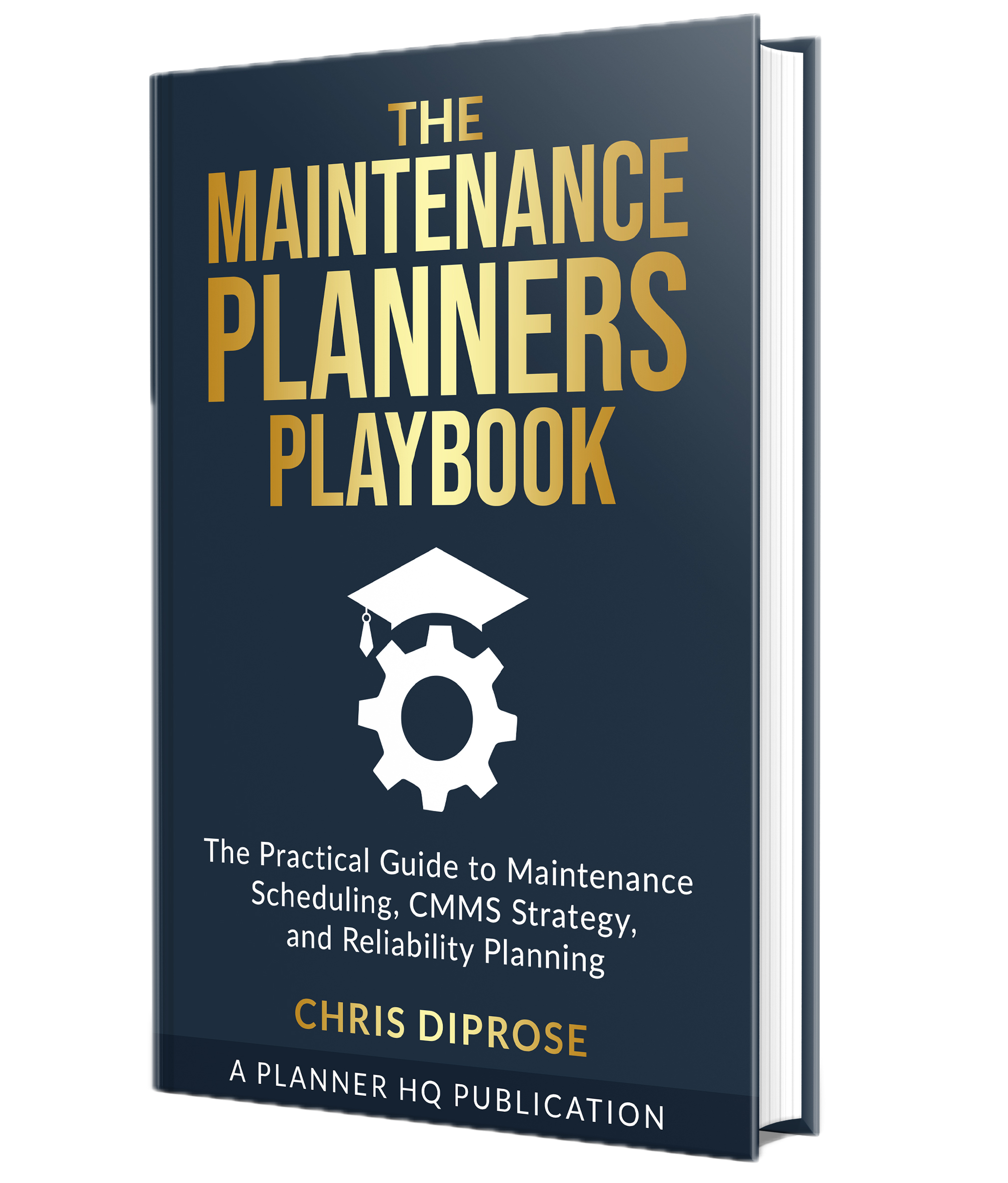
The Maintenance Planners Playbook
The original Planner HQ book that defines what good maintenance planning actually looks like in practice.
Rather than focusing on tools or systems alone, the Maintenance Planners Playbook addresses:
- The intent behind planning activities
- The behaviours of effective planners
- How planning functions mature over time
- Where planning commonly breaks down
It serves as the primary anchor for this pillar and a reference point for planners at all stages of their career
PLANNING FOUNDATIONS // Key Related Articles

How to Hire a Great Maintenance Planner
Hiring a great maintenance planner can transform how your organisation manages assets, downtime, and reliability. A skilled planner brings structure and foresight to maintenance, turning reactive chaos into planned precision. Yet, for many engineering and facilities teams, finding and hiring the right person is harder than it sounds.
How Do Planners Fit Into The Wider Org Structure?
Some report directly to a maintenance supervisor. Others sit under engineering. In some companies, planners are shifted into operations or even treated as part-time admin staff. This variety says a lot about how misunderstood the role still is.
Top 10 Maintenance Planner Skills for Reliability and Efficiency
In this post, we’ll break down the 10 essential skills every maintenance planner must have. Whether you’re new to the planning role or a seasoned professional looking to sharpen your edge, these skills are must-haves.
How Planning Foundations Shape Everything Else
Planning foundations determine how effectively every other aspect of maintenance planning performs. They set the conditions under which planning either becomes a disciplined, value-adding function or degrades into reactive coordination and administrative noise. Long before work orders are raised, schedules are built, or systems are configured, the foundations shape how planning is understood, practised, and trusted.
When foundations are weak, planning activity often increases while planning value declines. Planners become busy but ineffective, pulled into expediting, chasing information, and filling gaps left by unclear ownership and inconsistent standards. Decisions are made too late to influence outcomes, and execution teams lose confidence in planning outputs. In these environments, the issue is rarely a lack of effort or intent. It is almost always a lack of clarity around purpose, role, and expectations.
Strong planning foundations create alignment before work reaches execution. They define what planning exists to achieve, what planners are responsible for, and how planning quality should be judged. This clarity reduces friction between planning, operations, and maintenance teams, and allows uncertainty to be addressed early rather than absorbed downstream. As a result, schedules become more credible, work becomes more executable, and reactive intervention becomes the exception rather than the norm.
Foundations also shape how systems and processes are designed. CMMS structures, work management workflows, asset hierarchies, and reporting models are all reflections of underlying planning intent. When that intent is poorly defined, systems are often over-engineered, misused, or bypassed entirely. When foundations are sound, systems become enablers rather than obstacles, supporting consistent behaviour rather than compensating for its absence.
Perhaps most importantly, planning foundations influence behaviour. They shape how planners prioritise their time, how they interact with stakeholders, and how they make trade-offs under pressure. They also influence how planning is perceived across the organisation: as a strategic function that improves decision-making, or as a support role that reacts to problems created elsewhere. Over time, these perceptions compound, either strengthening or eroding the planner’s ability to influence outcomes.
Every other pillar within Planner HQ builds on this layer. Work management and execution depend on clear intent and ownership. CMMS governance depends on shared standards and disciplined behaviour. Asset and spare parts strategies depend on reliable planning inputs. Performance measurement and improvement depend on a clear understanding of what planning is meant to achieve in the first place. Without strong foundations, these elements become fragmented and inconsistent, regardless of the tools or processes applied.
For this reason, Planning Foundations is not a preliminary topic to be rushed through or assumed. It is the reference point against which all other planning decisions should be tested. When the foundations are right, planning becomes a stabilising force within the maintenance system. When they are not, no amount of optimisation elsewhere can fully compensate.
Stay Connected to the Planner HQ Learning Journey
Occasional updates when new frameworks, resources, and planning insights are released.
Why Planning Foundations Matter
When planning lacks clear foundations, it becomes reactive, misunderstood, and easy to bypass. Planners are pulled into administrative work, decisions are made without proper context, and execution suffers as a result.
Strong planning foundations create clarity before work begins. They align expectations, reduce friction between functions, and give planners the credibility needed to influence outcomes rather than just respond to them. Every other aspect of maintenance planning depends on this layer being sound.
Who This Pillar Is For?
This pillar is particularly relevant for:
1
Maintenance planners building confidence and professional identity
2
Experienced planners reassessing how they create value
3
Planning leads and managers clarifying role boundaries and expectations
4
Organisations trying to mature planning beyond reactive scheduling
How This Pillar Connects to the Wider System
Planning Foundations underpins every other pillar within Planner HQ.
Clear intent, role clarity, and planning standards enable effective work management and execution. They shape how CMMS structures are designed and governed. They influence how asset data and spare parts strategies are applied in practice. They also provide the reference point for performance measurement, improvement, and long-term planning strategy.
Without strong foundations, the rest of the system becomes fragmented and inconsistent.
PILLAR NAVIGATION
Use the below buttons to navigate between the 5 Pillars

PLANNING FOUNDATIONS

WORK MANAGEMENT & EXECUTION

CMMS & DATA GOVERNANCE

ASSET & SPARE PARTS STRATEGY