Hiring a great maintenance planner can transform how your organisation manages assets, downtime, and reliability. A skilled planner brings structure and foresight to maintenance, turning reactive chaos into planned precision. Yet, for many engineering and facilities teams, finding and hiring the right person is harder than it sounds.
The role of the maintenance planner is often misunderstood. Some organisations treat it as an administrative support job, others as a scheduling or coordination role. In reality, it sits at the very centre of the reliability process — linking work identification, planning, scheduling, execution, and feedback. A poor hire can quietly undermine the entire maintenance function, while a great one can elevate it to a world-class standard.
If you’re recruiting a maintenance planner or CMMS specialist, here’s what to look for, and how to recognise the people who can genuinely make a difference.
Understand What the Role Really Is (and Isn’t)
The first step in hiring a great maintenance planner is defining the role correctly. A planner is not an administrator or scheduler. Their core purpose is to ensure that every job entering the schedule is fully prepared — scoped, resourced, and ready to execute safely and efficiently.
They create the conditions for reliability by managing backlog quality, developing job plans, and maintaining data discipline within the CMMS. Without this structure, technicians waste hours chasing parts or waiting on permits, and reliability teams lose the visibility needed to improve performance.
When recruiting for a maintenance planner, make it clear in your job description that you’re seeking a process owner, not a clerical processor. Candidates with a strong understanding of work management principles, preventive maintenance, and job readiness will add far more value than someone focused solely on scheduling.
Look for Systems Thinking and Process Discipline
Great maintenance planners think in systems. They see how each part of the maintenance process connects — from work request to close-out — and understand where delays, errors, and inefficiencies occur.
Ask candidates to describe how they’ve improved a maintenance process in the past. A strong planner will talk about workflow, handoffs, and communication loops rather than isolated fixes. This mindset shows they’re thinking beyond tasks and toward system reliability.
Process discipline is equally important. Planning is not a one-time effort; it’s about building repeatable structure. A great planner standardises processes, develops job plan templates, and ensures consistency week after week. In interviews, look for candidates who value structure and explain why it matters.
Prioritise CMMS Competence and a Data-Driven Mindset
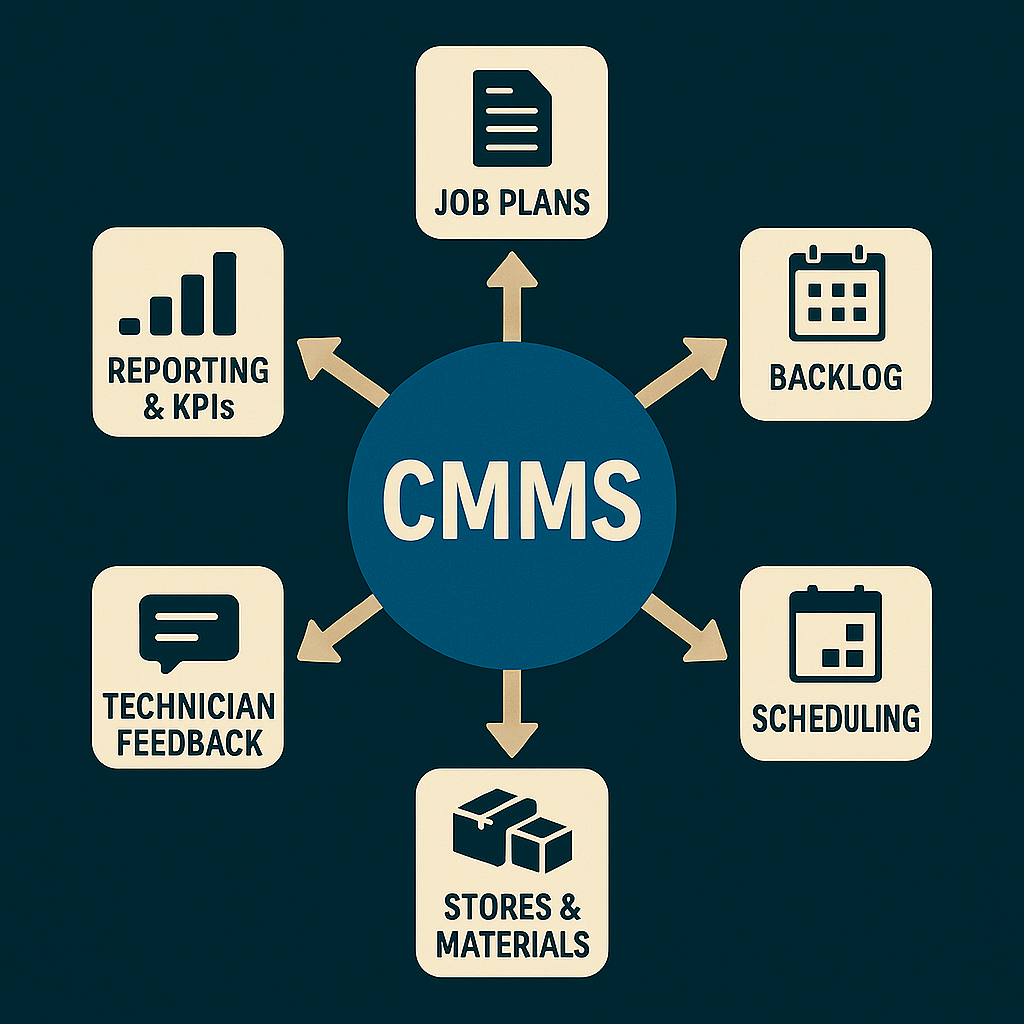
A planner’s effectiveness is tied to their relationship with the CMMS. It’s not just a digital filing cabinet; it’s the heart of maintenance intelligence. The best planners understand asset hierarchies, work order workflows, spare parts data, and feedback fields.
When interviewing candidates, explore how they’ve used CMMS data to make decisions. Ask questions such as:
- How do you ensure job feedback is accurate and complete?
- How do you maintain asset structures or link spare parts to job plans?
- What reports or KPIs do you rely on to monitor planning performance?
Candidates who speak confidently about CMMS data quality, asset metadata, and performance tracking will bring far more long-term value. Their work will directly impact your ability to measure reliability and optimise maintenance costs.
Evaluate Communication and Stakeholder Skills
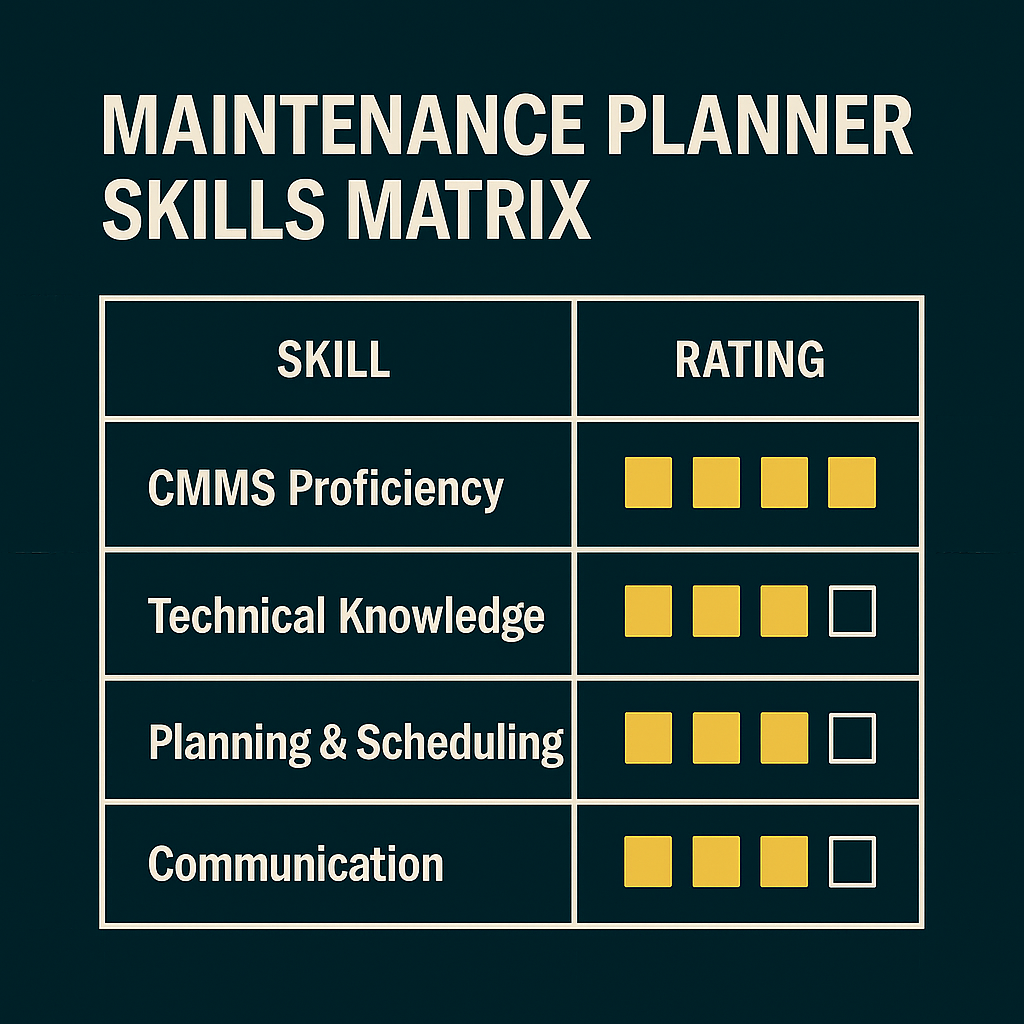
A maintenance planner sits at the intersection of multiple departments — maintenance, operations, procurement, and stores. Success in this role depends as much on communication as on technical ability.
Planners act as translators between groups that often speak different languages. They must explain operational constraints to technicians, technical risks to managers, and schedule conflicts to operations teams.
During recruitment, assess how candidates communicate complex topics. Ask them to describe a time they had to negotiate conflicting priorities or manage tension between maintenance and operations. The best answers show diplomacy, collaboration, and a focus on solutions rather than blame.
Assess Technical Understanding and Process Intelligence
A great maintenance planner doesn’t need to be the most experienced tradesperson in the team, but they do need enough technical understanding to plan work accurately and safely. The best planners combine this with strong process intelligence — the ability to structure work, define resources, and anticipate risks.
Candidates who have previously worked as technicians or engineers often bring the right practical insight. However, prioritise applicants who can also describe how they translate technical knowledge into planning decisions. For example, how they estimate task duration, identify required permits, or determine parts needs.
This balance between technical understanding and process thinking separates good planners from great ones.
Test for Attention to Detail and Continuous Improvement
Attention to detail is the cornerstone of great planning. A planner who consistently documents correct part numbers, safety steps, and labour hours creates clarity and trust throughout the maintenance process.
But great planners go further — they improve what they touch. They regularly review job feedback, refine plans, and drive out repeat issues. During the hiring process, ask candidates to explain how they’ve improved planning data or PM job quality in their previous roles.
Look for signs of curiosity and ownership. The best planners treat data integrity and process accuracy as personal responsibilities, not optional extras.
Use Scenario-Based Interview Questions
Traditional interviews rarely reveal how someone will perform in the structured, detail-oriented world of planning. Scenario-based questions are far more effective. Try asking:
- “You’ve inherited a backlog of several thousand work orders. How would you begin to bring it under control?”
- “Operations keep adding urgent jobs midweek — how do you protect the schedule?”
- “Technicians complain that jobs are unready. What process would you introduce to fix this?”
Strong candidates will approach these scenarios methodically, describing analysis, communication, and structured action. Weak ones will revert to firefighting language or focus only on short-term fixes.
Don’t Overlook Cultural Fit and Ownership
The best maintenance planners take pride in creating order. They’re detail-oriented, disciplined, and quietly influential. In interviews, listen for ownership cues — candidates who talk about their backlog, their schedule, or their data usually understand the accountability the role demands.
Culture fit also matters. A great planner thrives in a structured environment where discipline and collaboration are valued. If your maintenance team is still transitioning from reactive to proactive work, seek a candidate who’s patient, persistent, and able to bring others along on that journey.
The Hidden Cost of a Poor Hire
Hiring the wrong planner can create long-lasting damage. Poor planning breeds inefficiency, erodes technician trust, and undermines reliability culture. Data becomes unreliable, backlogs balloon, and urgent work dominates.
By contrast, hiring a great maintenance planner creates structure, builds confidence, and improves asset performance. It’s one of the most leveraged hires you can make in engineering and maintenance management. The right person will save far more than they cost — often in ways that spreadsheets cannot capture.
The maintenance planner role is one of the most misunderstood yet most impactful positions in any reliability organisation. When you hire well, you gain more than a planner; you gain a process architect, a communicator, and a champion of structured work.
At Planner HQ, we focus on helping organisations understand what great planning looks like — and helping planners reach that level. Whether you’re hiring your first maintenance planner or developing an established team, the difference between average and excellent planning is immense.
Explore theplannerhq.com to explore resources, books, and expanding range of tools designed to help you build high-performing planning teams.