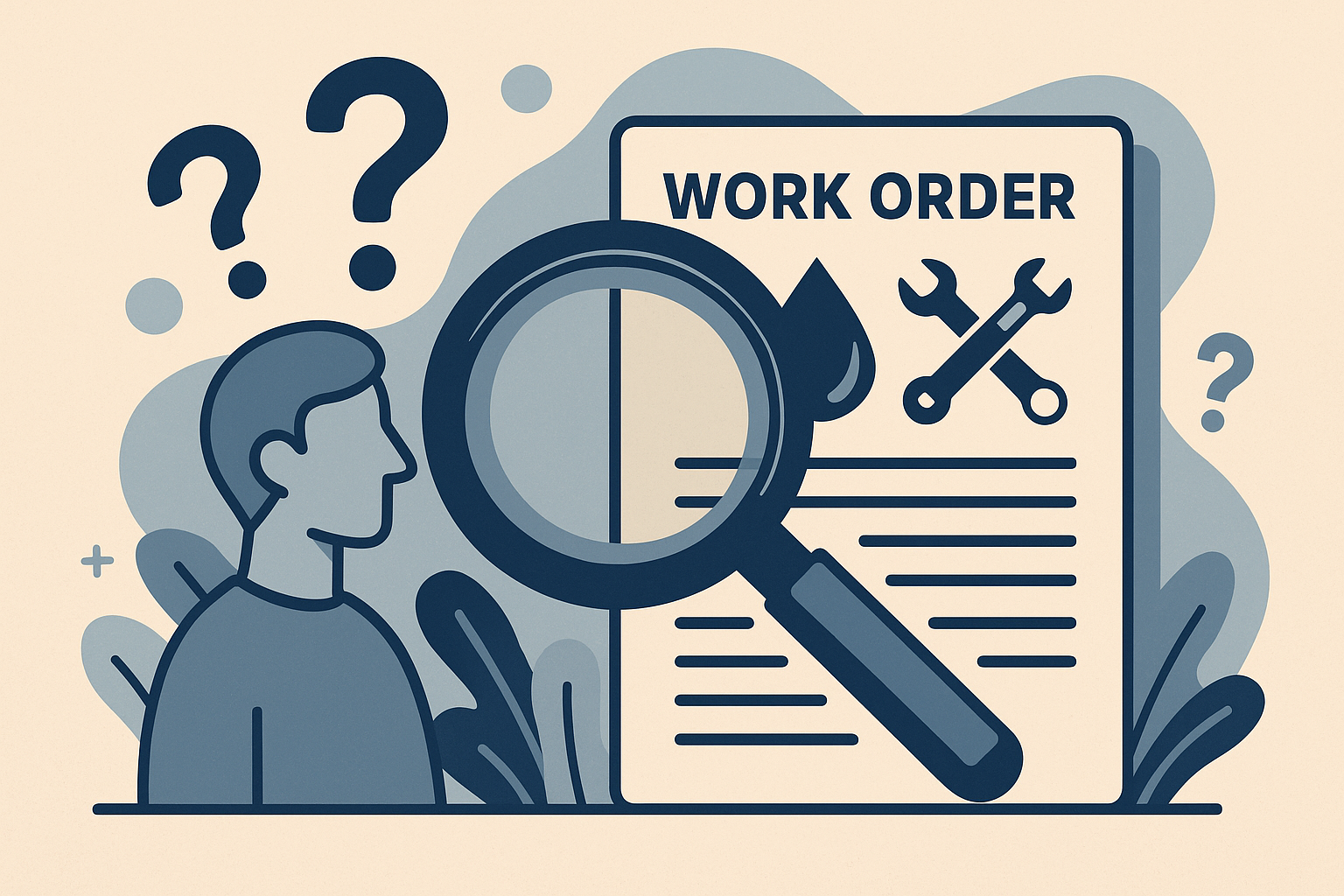
Search any job board for “maintenance planner” and you’ll find descriptions that vary wildly — from technical administrator to schedule coordinator to all-round maintenance fixer.
This, is a problem.
Across industries, the maintenance planning role is inconsistently defined, poorly understood, and frequently misused. As a result, organisations don’t get the value they expect from the role — and planners struggle to deliver the results they’re capable of.
So what’s really going wrong?
1. Planning Is Treated Like Admin
In many sites, planners are seen as admin support. Their role is reduced to printing work orders, uploading documents, and updating spreadsheets.
But maintenance planning is not data entry.
It’s not about ticking boxes or formatting job cards. It’s a strategic function that should sit at the centre of reliability execution.
Planners are supposed to:
- Translate vague work requests into clear, executable plans
- Define scope, labor, materials, and estimated duration
- Coordinate with procurement, operations, and engineering
- Build and maintain a backlog of high-quality, ready-to-execute work
- Drive CMMS data quality and PM optimization
When planners are relegated to administrative tasks, these responsibilities fall by the wayside — and the entire maintenance system suffers.
2. Planners Are Pulled into Firefighting
It’s not uncommon to see planners running from one urgent issue to the next: sourcing parts, chasing technicians, handling breakdown reports, or attending every daily huddle on site.
While it may seem helpful in the moment, this reactive use of planning time comes at a cost.
Every hour spent responding to unplanned work is an hour not spent planning future work. Over time, the result is a shrinking backlog, declining PM quality, and growing inefficiencies.
Planning is supposed to be proactive by design.
The more it’s absorbed into reactive firefighting, the more reliability erodes — and the harder it becomes to recover.
3. The Role Isn’t Defined — So It’s Filled by Default
In too many teams, the planner role is left intentionally vague: “help where needed,” “assist the team,” “support the schedule.”
That may sound flexible, but in practice it creates confusion, overlap, and conflict. Supervisors delegate execution decisions. Engineers expect technical depth. Stores rely on the planner to track down parts. And the planner is caught in the middle — unsure of what to prioritise, and pulled in five directions at once.
Without a clearly defined role, the planner becomes everything — and nothing — at the same time.
4. Planning Is Seen as a “Support” Role, Not a Performance Driver
When maintenance performance is reviewed, it’s usually technician productivity, asset downtime, or work order compliance that’s assessed.
Rarely is the planner asked:
- Were the job plans clear and complete?
- Was the backlog ready for scheduling?
- Did parts arrive in time for execution?
- Were scope, estimates, and documentation accurate?
Yet all of these elements are controlled by the planning process — and all of them directly affect outcomes.
Planning is not a passive support function. It shapes technician efficiency, work quality, schedule reliability, and ultimately — equipment performance.
5. Planning Is Underused — Until It’s Too Late
Often, planning is only “activated” when performance declines. A planner is brought in to fix the chaos — but without support, resources, or system maturity.
What usually happens:
- There’s no existing backlog
- Asset metadata is outdated or incomplete
- PMs are templated, vague, or redundant
- Stakeholders don’t trust or use the CMMS
- The planner is expected to show immediate improvement
But planning isn’t a quick fix.
It’s a discipline. It requires time to develop, consistency to maintain, and buy-in from every level — especially leadership.
Final Thoughts
The planning role fails not because planners lack capability — but because the role itself is too often misunderstood, misused, and under supported.
For planning to work, organisations must:
- Clearly define the planner’s responsibilities and boundaries
- Protect the role from reactive overload
- Recognise planning as a performance-driving function
- Provide systems, support, and time for it to mature
- Involve planners early in reliability conversations, not just execution
Planning is where reliability begins. It deserves clarity, structure, and respect — not confusion, chaos, and compromise.
These topics and many more are explored in more detail in The Maintenance Planners Playbook, designed to help you improve your maintenance scheduling, CMMS Strategy and Reliability Planning skills; and really make an impact in your organisation.