
ASSET & SPARE PARTS STRATEGY
The reliability enablers behind effective maintenance planning.
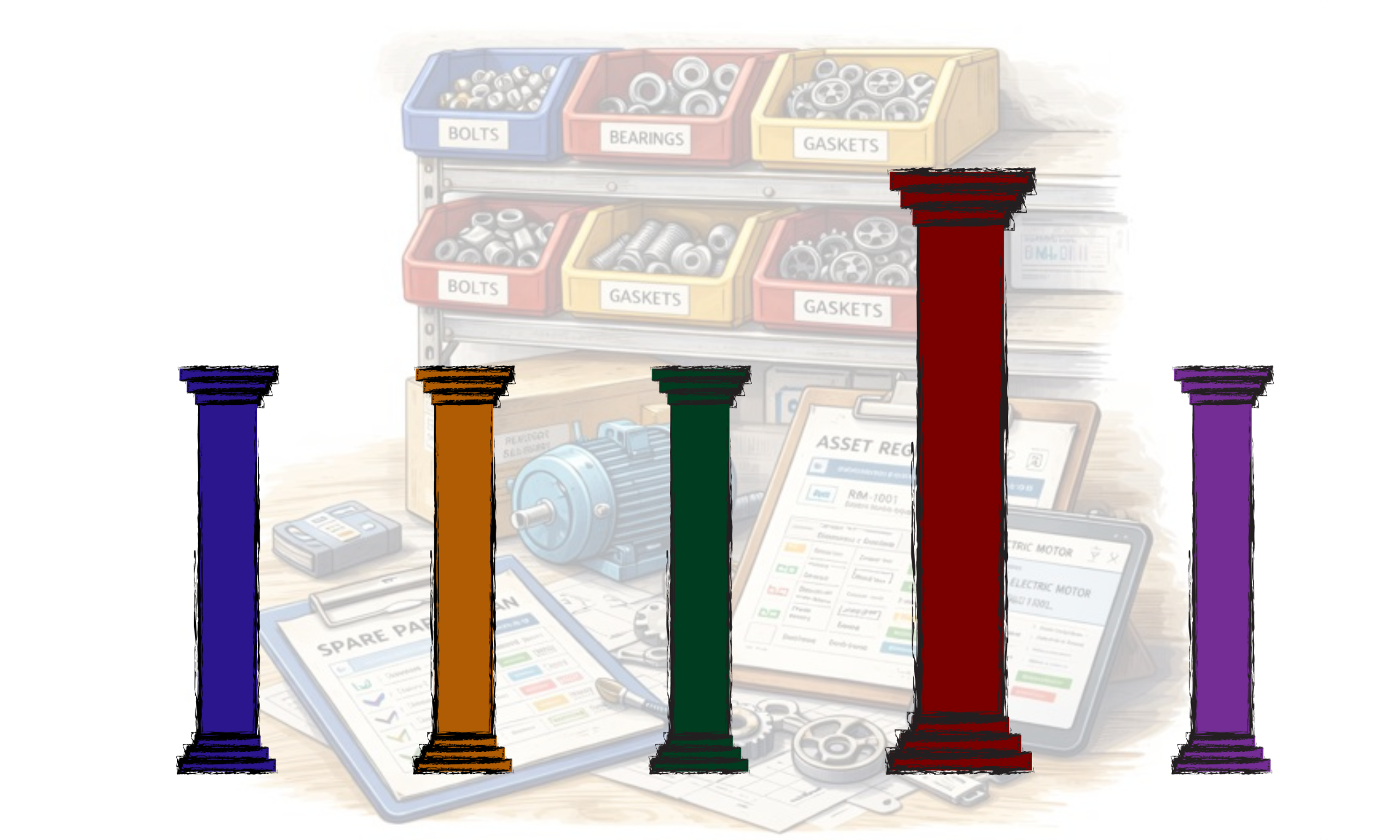
The reliability enablers behind effective maintenance planning.
Asset & Spare Parts Strategy focuses on the physical and structural enablers that determine whether maintenance plans can be executed reliably. It covers how assets are structured, how spare parts are defined and managed, and how planning decisions are supported by accurate technical and materials information.
This pillar sits at the intersection of planning and reliability. When asset data and spare parts strategies are weak, planning effort is routinely undermined at execution. When they are strong, planning becomes predictable, proactive, and resilient.
PILLAR 4 // Asset & Spare Parts Strategy – Core Topics
Asset Structure & Hierarchies
How assets should be structured to support planning, reporting, and reliability decision-making. This topic focuses on clarity, consistency, and avoiding over-complexity.
Equipment Metadata and Tech Info
Accurate metadata underpins good planning. This section explores what information planners actually need, and how gaps in technical data create execution risk.
Bill of Material (BOM) Accuracy
BOM quality directly affects execution readiness. This topic addresses why BOMs fail, how ownership should be defined, and how planners depend on reliable materials information.
Spare Parts Criticality
BOM quality directly affects execution readiness. This topic addresses why BOMs fail, how ownership should be defined, and how planners depend on reliable materials information.
Stock Strategy and Availability
Effective stock strategies balance risk, cost, and service level. This topic focuses on how materials strategy supports planning rather than reacting to failure.
Planning and Reliability Alignment
Planning does not exist in isolation from reliability strategy. This section explores how failure modes, asset criticality, and reliability priorities should influence planning decisions.
PILLAR 4 // Frameworks & Resources
The Planning Foundations pillar is supported by dedicated frameworks and long-form resources that explore these ideas in depth and translate them into practical thinking tools for planners and leaders.
These assets sit at the heart of this pillar.

Spare Parts Strategy
(Coming Soon)
A deep-dive guide focused on building spare parts strategies that support maintenance planning, execution readiness, and reliability outcomes. This book will explore how criticality, bills of material, and stocking decisions should be aligned with planning needs rather than driven solely by cost or historical practice.
Written from a planning-led reliability perspective, Spare Parts Strategy will address how materials data, governance, and ownership influence execution predictability and risk. It is intended for organisations looking to move beyond reactive stocking and emergency procurement toward deliberate, data-informed spare parts management.

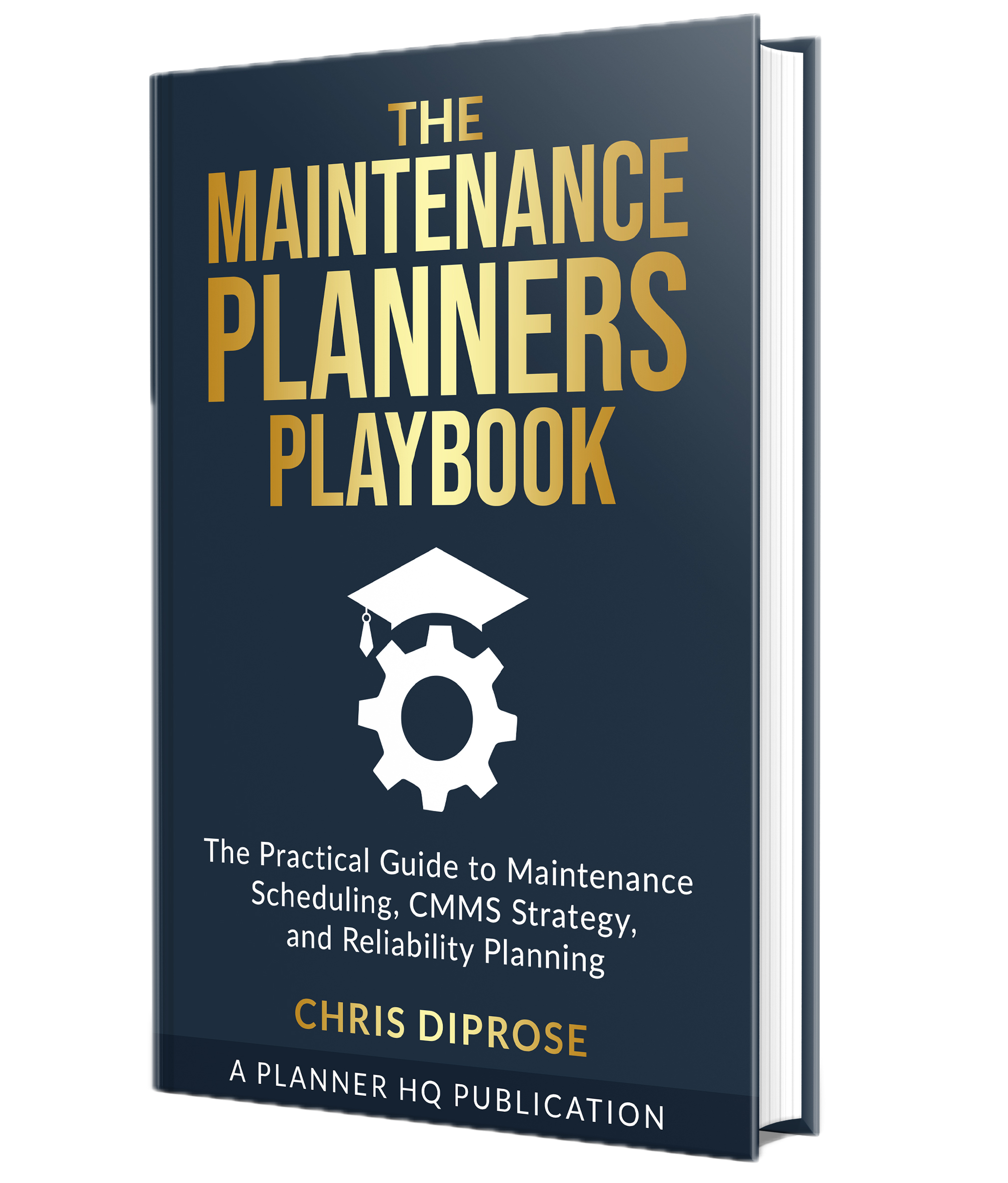
The Maintenance Planners Playbook
A practical guide to strengthening the foundations that allow maintenance plans to be executed reliably in the real world. From an asset and spare parts perspective, the Playbook explores how incomplete asset data, unclear ownership of technical information, and weak materials discipline introduce risk into planning long before work reaches execution.
The book frames asset structures, bills of material, and materials availability as core planning inputs rather than background data. It highlights how planners are often forced to compensate for gaps in asset and materials strategy, and why addressing these enablers is essential for improving execution predictability and reliability outcomes.
From an asset and materials lens, the Playbook addresses:
- How planners can engage reliability and stores teams more effectively
- How asset data quality influences planning confidence and readiness
- The planning impact of unreliable BOMs and spare parts information
- Why materials discipline is a prerequisite for schedule credibility
PLANNING FOUNDATIONS // Key Related Articles

A Guide to Equipment Numbering
A well‑structured asset hierarchy is a critical building block for reliable maintenance, but without a proper numbering standard, even the best hierarchy can become confusing and inefficient.

5 Proven Strategies for Better Spare Parts Management
For maintenance planners, spare parts management isn’t just a logistics concern. It’s a cornerstone of reliability. Effective spare parts management means having a structured, disciplined approach to stocking, staging, and forecasting.
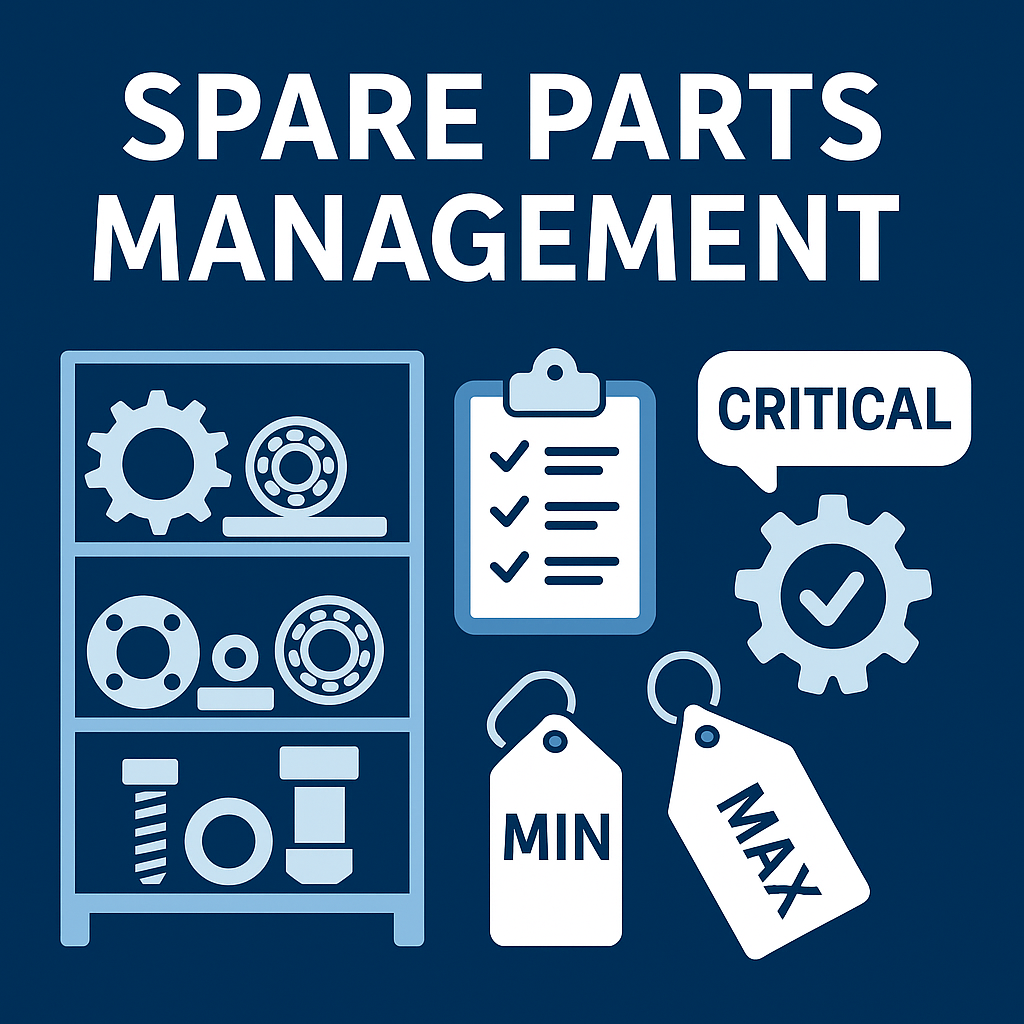
Smart Stock: Getting Your Spare Parts Strategy Right
Spare parts are the invisible glue that holds planned work together. And as a planner, even if you’re not directly managing the stores, you’re absolutely relying on that glue every day. So how do you make sure your spare parts setup is helping — not hindering — the work you’re trying to plan?
How Asset & Spare Parts Strategy Shape Planning Effectiveness
Asset and spare parts strategy define the physical boundaries within which maintenance planning operates. No matter how strong planning intent or work management discipline may be, planning effectiveness is ultimately constrained by the quality of asset information and the availability of materials required to execute work. When these enablers are weak, planning effort is routinely undermined at the point of execution.
From a planning perspective, asset structures and spare parts data are not abstract reliability concerns. They directly affect whether work can be prepared accurately, whether execution risk can be assessed realistically, and whether schedules remain credible once released. Incomplete asset hierarchies, unreliable bills of material, or unclear ownership of technical data introduce uncertainty that planners are often forced to absorb manually.
Poor asset data transfers risk downstream. When planners cannot rely on asset metadata or materials information, assumptions replace preparation. Jobs are released without confidence in part availability, technical requirements are clarified late, and execution teams compensate through workarounds, delays, or emergency procurement. Over time, this erodes trust in the plan and normalises reactive behaviour.
Spare parts strategy plays a particularly significant role in execution readiness. Stock availability is often treated as a stores or procurement issue, but from a planning lens it is a core input into decision-making. Planners depend on clear criticality definitions, accurate BOMs, and reliable stock data to assess whether work can proceed as planned. When these inputs are missing or unreliable, planning decisions lose their grounding in reality.
Reliability strategy and planning readiness are closely linked. Asset criticality, failure modes, and maintenance strategies should inform how work is prioritised and prepared. When these connections are weak, planning becomes disconnected from risk, and effort is distributed evenly rather than intelligently. Strong alignment allows planners to focus their time where it delivers the greatest reliability and operational benefit.
Asset and spare parts strategies also determine how resilient planning systems are under pressure. In environments with high data quality and disciplined materials management, planners can absorb change without destabilising the plan. In environments where asset and materials data are fragmented, even small disruptions can cascade into widespread schedule failure.
Ultimately, this pillar highlights a hard truth: planning effectiveness cannot exceed the quality of the physical and informational foundations that support it. When asset structures are clear, technical data is owned and maintained, and spare parts strategies are aligned with planning needs, planners can operate proactively and with confidence. When these elements are weak, planning effort is consumed by compensation rather than control, regardless of intent or experience.
Stay Connected to the Planner HQ Learning Journey
Occasional updates when new frameworks, resources, and planning insights are released.
Why Asset & Spare Parts Strategy Matter
Asset and spare parts strategy determine whether maintenance plans can be executed as intended or unravel at the point of delivery. When asset data is incomplete and materials availability is uncertain, planners are forced to rely on assumptions, increasing execution risk and schedule disruption.
Strong asset structures and reliable materials information allow planners to assess readiness with confidence. They reduce late-stage surprises, limit emergency procurement, and protect the schedule from avoidable delays. This stability is essential for building trust in planning outputs and improving execution predictability.
At a system level, effective asset and spare parts strategy enable planning to support reliability objectives rather than react to failure. When materials risk is understood and managed deliberately, planning effort can be focused where it delivers the greatest operational and reliability benefit.
Who This Pillar Is For?
This pillar is particularly relevant for:
1
Maintenance planners dependent on accurate asset data and materials readiness
2
Reliability engineers and asset managers shaping maintenance strategies
3
Reliability engineers and asset managers shaping maintenance strategies
4
Organisations experiencing execution delays due to stockouts or poor asset data
How This Pillar Connects to the Wider System
Asset and spare parts strategy provide the physical enablers that allow planning intent to translate into executable work. The clarity established in Planning Foundations defines why readiness matters, while this pillar determines whether that readiness can be achieved in practice.
Work Management and Execution rely on accurate asset data and reliable materials availability to maintain schedule stability. When parts are missing or asset information is unclear, execution absorbs the resulting risk through delays, rework, and emergency intervention. Strong asset and materials strategy protect the plan by reducing these failure points.
CMMS and data governance underpin this pillar by ensuring that asset structures, bills of material, and stock data are accurate, owned, and maintained over time. Without system discipline, even well-defined asset and spare parts strategies degrade quickly.
Performance measurement and improvement depend on reliable execution inputs. Asset data quality and materials availability directly influence schedule compliance, reliability outcomes, and cost performance. This pillar enables meaningful analysis and informed decision-making rather than reactive reporting.
PILLAR NAVIGATION
Use the below buttons to navigate between the 5 Pillars

PLANNING FOUNDATIONS

WORK MANAGEMENT & EXECUTION

CMMS & DATA GOVERNANCE

ASSET & SPARE PARTS STRATEGY